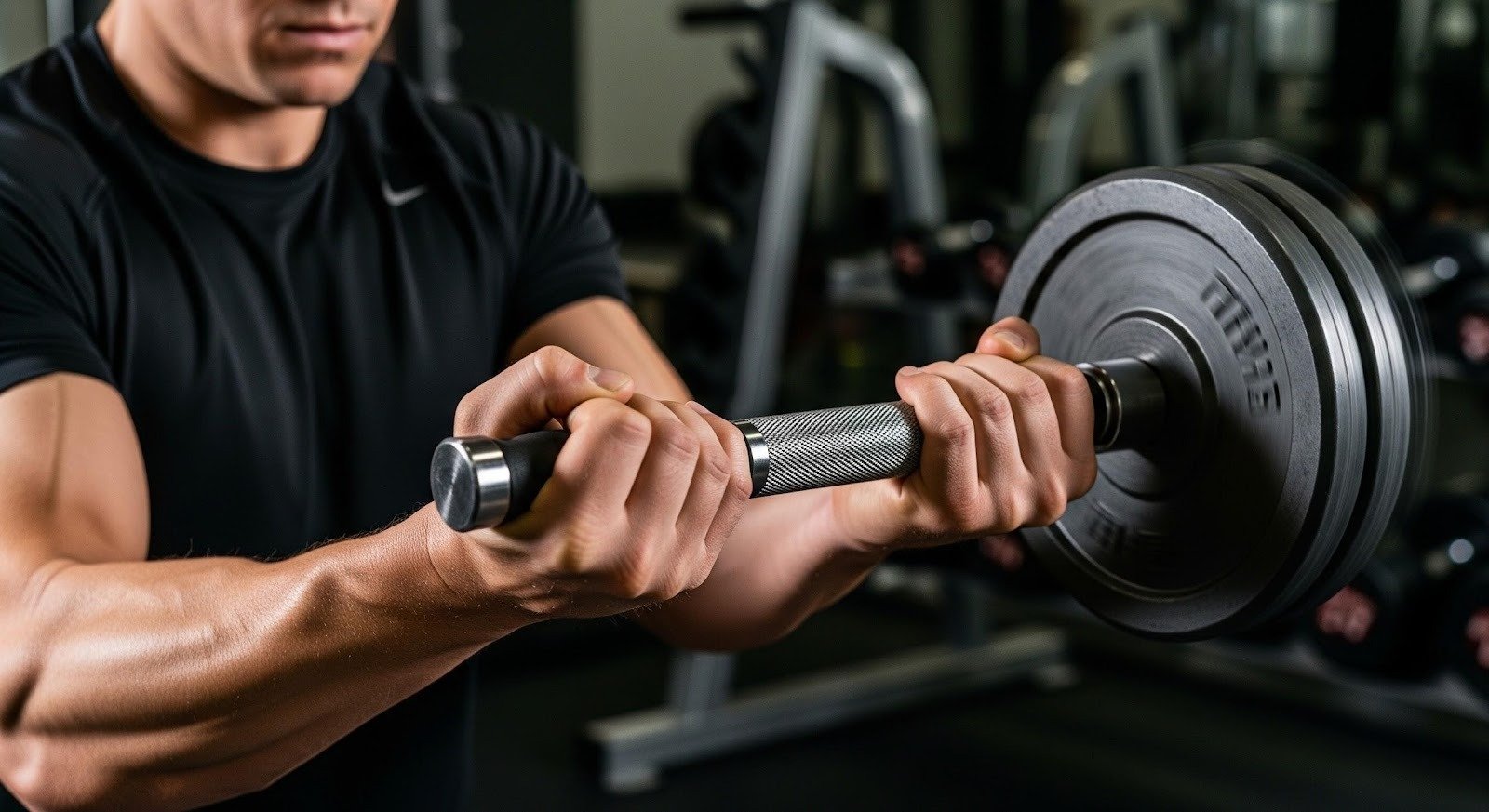
Having finger, wrist, and forearm strength is essential for gripping, pulling, pushing, and all other athletic activities. If your hands are not in the right condition, your performance will decrease, and the chances of getting injured in the elbows or wrists will increase.
The good news is that you do not need a complex plan to build finger, wrist, and forearm strength. The only requirement is to know a technique for finger, wrist, and forearm power that works. The following daily routine will help you build finger, wrist, and forearm power in a simple yet effective way.
Why Daily Hand and Forearm Routine Matters
The forearm muscles take about 24 to 48 hours to recover. The finger and wrist tendons take a lot longer to recover. Therefore, you can work on your fingers and wrists every day, provided you do so in a manner that does not irritate the tendons.
What makes a daily routine safe yet effective for finger, wrist, and forearm power?
– The daily routine should vary in terms of intensity.
– The daily routine should not take you to the limit every day.
– The daily routine should include mobility exercises.
– The daily routine should include exercises for the extensor and flexor muscles.
The objective of the daily routine is to condition the body without irritating the tendons.
How the Daily Routine for Finger, Wrist, and Forearm Strength Is Structured
The daily routine for finger, wrist, and forearm power takes about 15 to 20 minutes to complete. The structure of the daily routine includes:
– Warm-up exercises
– Strength exercises
– Isometric exercises
– Mobility exercises
Step 1: Gentle Warm-Up (3–5 minutes)
Wake up the forearm and get the blood flowing. Small motions to wake everything up.
– Wrist circles
– Quick fists
– Light finger band extensions
– Mild wrist flexion and extension stretches
Remember to incorporate a warm-up. Tendons don’t like the cold, and it is best to avoid it.
Step 2: Strength Block (10–12 minutes)
Keep your body movements controlled. No jerking or swinging.
– Wrist Curl (Flexion)
– 3 sets of 12–15 reps
– Light to moderate dumbbell weight
– Control is important
– Reverse Wrist Curl (Extension)
– 3 sets of 12–15 reps
– Lighter dumbbell weight
– Control is important
– Finger Squeezes/Hand Grippers
– 2–3 sets of 10–12 reps
– Do not grip too hard
Both forearms are trained equally to prevent any side-to-side imbalances.
Step 3: Isometric Grip (3–5 minutes)
Isometrics are used to improve grip strength.
– Dead Hangs
– 2–3 sets of 20–30 seconds
– Emphasis is to engage shoulders
– Farmer Carry
– 2 rounds of 30–40 seconds
– Neutral wrists
– Alternate days between farmer carries and dead hangs
Step 4: Mobility & Recovery (2–3 minutes)
Soften up with easy stretches.
– Reverse prayer
– Forearm stretch (palms facing down)
– Forearm massage
Signs You’re Training the Right Way
– Your hang times and carry times are increasing steadily
– Your wrists are no longer strained from lifting
– Your joints are no longer flaring up unexpectedly
– Your forearms are not overwhelmed
– Your progress is gradual and controlled
Common Mistakes to Avoid
– Trying to train to failure each session
– Skipping finger extensions in your workout routine
– Gripping to maximum effort each session
– Skipping warm-ups before workouts
– Trying to lift the weight up too quickly
Your forearms are not fond of sudden increases in weight. It is best to gradually increase the weight to avoid going back to square one.
How to Progress
– Select one option from the following and apply it every 1-2 weeks:
– Increase hang times by 5-10 seconds
– Increase the dumbbell weight by 1 unit
– Increase the distance
– Slow down your workout tempo
– Don’t increase the weight and workout intensity at the same time
Recovery Tips
– Take at least one day off from training each week
– Stretch lightly after workouts
– Don’t grip during your day off from training
– If your elbow is tender, tone down your workout
Exercise Overview
| Exercise | Primary Target | Frequency | Key Benefit |
| Wrist Curls | Forearm flexors | 3–4x/week | Improves grip strength |
| Reverse Wrist Curls | Forearm extensors | 3–4x/week | Prevents imbalance |
| Finger Extensions | Finger extensors | Daily (light) | Joint stability |
| Dead Hangs | Support grip | 2–3x/week | Grip endurance |
| Farmer Carries | Full forearm & wrist | 2–3x/week | Functional strength |
| Light Mobility Work | Wrist joints | Daily | Injury prevention |
FAQs
Can I train my forearms every day?
You can perform daily forearm training when you control training intensity and you avoid doing heavy workouts every day.
How long before I see results?
You can achieve better endurance and strength results after a training period of four to six weeks.
Should beginners use heavy weights?
No. Start with light weights and focus on maintaining control of your movements.
Is mild soreness normal?
Yes. The elbow and wrist area will experience continuous pain which is normal while training.
Can this routine improve lifting performance?
Yes. A stronger grip results in improved pulling power and enhanced stability during pressing movements.
Conclusion
A daily routine to increase finger, wrist, and forearm strength must prioritize balance, gradual progression, and recovery. Training flexors and extensors through dynamic and isometric exercises with alternating intensity levels will lead to safe and sustainable results.
Stronger hands and wrists improve lifting performance, athletic control, injury resistance, and everyday function. Incorporating a grip strength exerciser into your routine helps target the smaller supporting muscles effectively. Intelligent training of these small muscles leads to significant improvements in total-body strength and long-term resilience.