Arm strength is not always perceived properly. People tend to think that arm strength can be acquired by simply lifting very heavy loads and performing a great number of curls. In fact, strength can be achieved with the help of a set of appropriate equipment, techniques, and regular training. Being impatient and disregarding the correct exercise technique can lead to rapid progress but can also put your health at stake.
If you want to achieve fast and healthy results, you need to concentrate on your training. You should work gradually, apply appropriate tools, and develop good endurance and arm strength.
Get the Basics Right First
Before incorporating new equipment or training methods, it is essential to understand muscle growth principles. Strength is acquired through resistance training and sufficient recovery.
The key aspects include:
- Exercises with complete range of motion
- Slow and controlled execution of movements
- Gradual progression of resistance
Neglecting these fundamentals will result in suboptimal outcomes regardless of how sophisticated your equipment is. A solid foundation guarantees sustainable progress.
Top Equipment for Arm Strength
1. Dumbbells
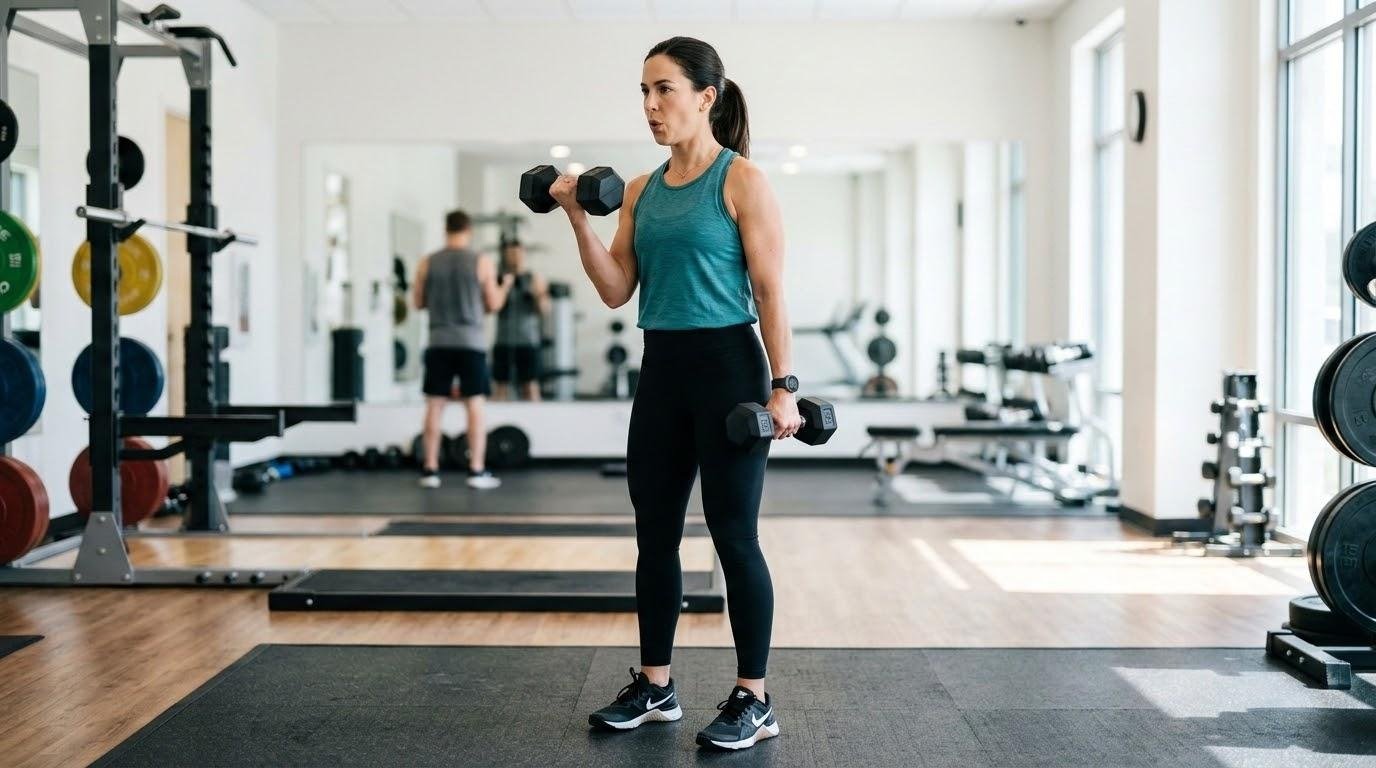
Dumbbells are some of the best and versatile pieces of equipment for developing arm strength. They enable natural body mechanics and ensure balanced muscle engagement.
Good for:
- Bicep curls
- Hammer curls
- Triceps overhead extensions
Why they are effective:
Dumbbells activate stabilizing muscles, enhancing motor control and overall strength. In addition, they are easy to modify, making them ideal for all levels of expertise.
2. Resistance Bands
Resistance bands are very simple yet quite effective. They are especially beneficial for individuals who train at home or need low-impact equipment.
Suitable for:
- Warming up
- Low-resistance exercises
- Rehabilitative exercises
How they work:
Bands create continuous tension when exercising and therefore do not exert excessive strain on joints. At the same time, they are quite portable and convenient to use.
3. Pull-Up Bar
The pull-up bar is arguably the most effective device to achieve functional strength since it works several muscle groups such as the arm muscles, shoulders, and back.
Suitable for:
- Pull-ups
- Chin-ups
How it works:
Working out using the body weight strengthens the muscles while simultaneously improving hand grips, which is vital for arm development.
4. Cable Machines
Cable machines are common in fitness clubs due to their ability to create smooth resistance through the workout routine.
Suitable for:
- Triceps pushdown
- Cable curls
- Rope extensions
How they work:
They keep the tension continuous throughout the exercise.
5. Grip Builders
Your grip may be one of the weakest areas in your workout, yet it can make all the difference in arm strength.
Good for:
- Forearms
- Grip stamina
Why they help:
Building grip strength will enhance your capacity to lift heavy objects and do exercises such as deadlifts, pull-ups, and rows.
Comparison of Tools
| Tool | Best For | Safety Level | Ease of Use |
| Dumbbells | Overall arm strength | High | Easy |
| Resistance Bands | Beginners & rehab | Very High | Very Easy |
| Pull-Up Bar | Functional strength | Medium | Moderate |
| Cable Machines | Controlled training | High | Easy |
| Grip Strengtheners | Forearms & grip | Very High | Very Easy |
Techniques That Really Work
1. Progressive Overload
The most important technique in strength training. Strength is gained through gradually increasing the resistance or intensity.
How can it be done?
- By increasing the weight
- Increasing the number of reps
- Increasing muscle control
Without progressive overload, muscles adapt and get used to the same amount of resistance.
2. Emphasize Proper Form over Weight
One of the worst things you can do when lifting weights is doing exercises with improper form.
- Make sure that all movements are smooth
- Avoid using momentum when lifting the weight
- Keep a good posture
Proper form allows you to work out muscles effectively.
3. Work Your Biceps and Triceps
It is true that many people pay special attention to their biceps as they are more visible. Nevertheless, triceps are actually a bigger part of your arm.
- Biceps are engaged during pulling
- Triceps during pushing
- Proper balance of strength is the key.
4. Utilize Controlled and Slow Repetitions
Slow exercises ensure that you keep tension in the muscles for a longer period of time.
- Pick up the weight slowly
- Release it even slower
This will enhance muscle involvement and help achieve stronger results faster.
5. Always Warm-Up Properly
A good warm-up routine ensures that your muscles are prepared for work.
- Light cardio – 5 min.
- Dynamic stretches
- Light resistance exercises
This part of the routine is usually neglected, although it is very important for training.
6. Adequate Rest Time
Resting muscles build strength; workouts don’t do this.
- Ensure that there are at least 48 hours between strenuous training sessions
- Sufficient sleep
- Proper hydration
Otherwise, you might become tired, experience decreased productivity, and even hurt yourself.
A Basic Routine Plan
It’s always better to stick to something rather than overcomplicate the process.
- Day 1: Bicep muscle-targeting exercises
- Day 2: Rest day or light exercises
- Day 3: Tricep muscle-targeting exercises
- Day 4: Rest day
- Day 5: Arm muscles combined workout
- Day 6: Light exercise session or full-body exercises
- Day 7: Rest day
Common Mistakes to Avoid
- Training your arms every day without giving them time to recover
- Beginning with heavy weights before your body is ready
- Neglecting proper exercise techniques
- Failing to warm up and stretch
- Not progressively adding more resistance to your workouts
These are some mistakes to avoid to improve your workouts and prevent injury.
FAQs
1. How soon can I expect to gain arm strength from exercises?
For most individuals, visible changes may start showing in about 2-4 weeks of continuous training and proper exercise techniques.
2. Can resistance bands alone build muscle and arm strength?
Resistance bands can be used in isolation for beginners or moderate strength training. For advanced levels, combining resistance bands with other forms of exercises, such as using dumbbells, would be ideal.
3. Is there an ideal number of repetitions for developing strength?
The recommended number of repetitions to develop arm strength is 8 to 12 per set.
4. Can I perform arm exercises daily?
No. To avoid overusing your muscles, rest days should be incorporated into your training routine.
Final Thoughts
Fast-tracking your arm strength gains is feasible only if done correctly. While using the appropriate equipment may enhance your performance, the techniques, commitment, and patience involved determine your success. Incorporating tools like a hand grip strength trainer can further improve your results by strengthening your forearms and enhancing overall grip.