Do you often get confused between curly hair and wavy hair care routines? It does happen often when people can’t select whether they have curly hair or wavy hair. We are here to break down for you the differences and care tips.
Do you have loose “S” shapes or tighter, springy spirals or corkscrews? Well, this is where all the difference starts.
Curly Hair
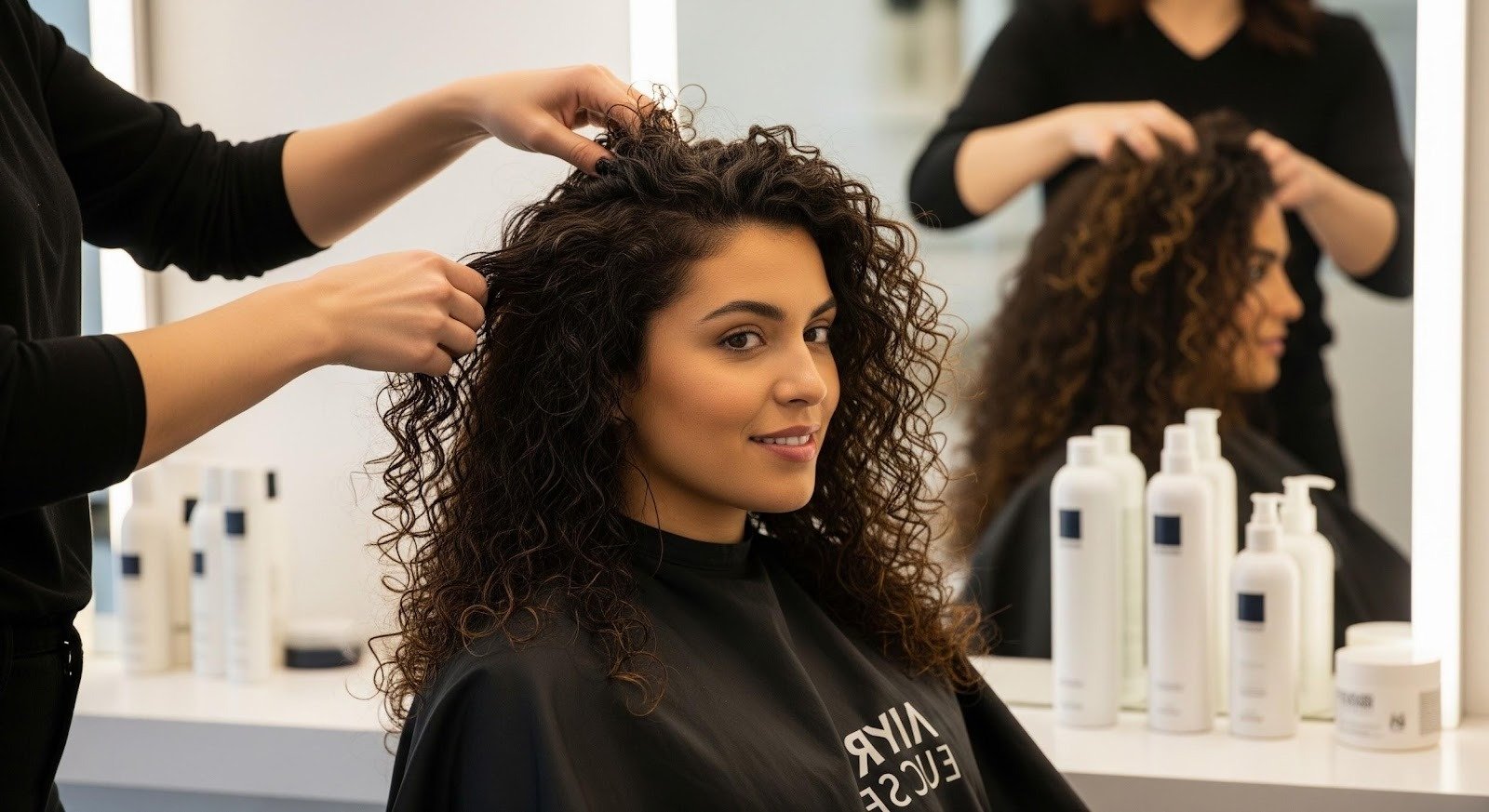
Curly hair is a spiral or coil shape that varies from loose curls to tight corkscrews. This textural pattern often begins close to the scalp and gives curls a defined bounce and volume. Curly hair typically has more body and density compared to other types of hair, and it tends to be naturally drier. The coiled pattern makes it harder for scalp oils to travel down the strands.
Curly hair requires extra hydration, gentle detangling, and curl-defining products to maintain its shape and health. Here is some more information:
- Curly hair structure is a 360-degree spiral or coil.
- They are usually thick, coarse and dense.
- Curly hair is drier than wavy hair.
- Curls don’t allow natural scalp oils to travel easily down the strand.
- They are prone to dryness and frizz.
- They require intensive moisture and gentle handling.
Types:
- Loose curls
- Medium curls
- Tight curls
Wavy Hair
Wavy hair occupies a middle ground between straight and curly hair. They form an “S” shape pattern with soft, flowing waves that start lower down the hair strand. Unlike curls, wavy strands do not form tight spirals but rather create loose, relaxed bends. They have a natural and effortless texture. They often have more shine and less volume. They are easier to manage and style.
However, wavy hair can still experience frizz and require the right care to enhance the natural wave pattern while maintaining smoothness. Here is the information to understand better:
- Wavy hair has looser curves without tight spirals.
- They tend to be less voluminous with a lighter texture and more shine than curls.
- Generally easier to manage as compared to curls.
- Less prone to severe dryness.
Types:
- Fine, loose waves
- Medium waves
- Thick, defined waves
Maintaining Curly and Wavy Hairs: General Tips and Special Care
Now that we know the difference between curly and wavy hair, let us see how to take care of them. First, let us look forward to the general tips for both and then move ahead separately.
General Tips:
- Use sulfate-free shampoos so as not strip the natural oils.
- Condition regularly with deep, moisturising formulas.
- Limit washing frequency; this will help retain moisture.
- Avoid harsh brushing.
- Detangle hair gently when wet using fingers or wide-tooth combs.
- Sleep on silk or satin pillowcases; this will help reduce friction and frizz.
Curly Hair Care
- Incorporate leave-in conditioners and rich curl creams
- Apply styling gels or mousses, it locks in moisture and curls.
- Deep condition weekly, it wil help combat dryness.
Wavy Hair Care
- Opt for lightweight styling products that don’t weigh waves down.
- Enhance wave definition with sea salt sprays or light curl enhancers.
- Avoid heavy crams or oils, as they can flatten waves.
- For natural-looking waves, air-dry or diffuse.
The Best Products for Curly and Wavy Hair
Let us see which shampoo, conditioner, styling products or deep conditioners are good for wavy and curly hair.
For Curly Hair:
- Opt for moisturising, sulfate-free shampoos.
- Rich and hydrating conditioners are well-suited for curly hair.
- Gels and mousses with curl hold are ideal for styling products.
- Curl creams and leave-in conditioners to enhance the quality of hair.
- Weekly intense moisture masks are good for deep conditioning.
For Wavy Hair:
- Opt for a gentle and lightweight shampoo.
- Light and detangling conditioners are good for your wavy hair.
- Lightsprays or mousses are okay for leave-in treatments.
- Sea salt sprays and light curl enhancers are okay as styling products.
- Biweekly light conditioning masks are good for deep conditioning.
You must recognise your hair type before proceeding with the hair care treatments. Then you will understand which product is the best and which type of car your hair needs the most.
Final Thoughts
Deciding whether wavy or curly hair involves recognising important differences in the pattern. “S” shapes often signify the wavy hair, whereas curly hair is a spiral or coil shape that varies from loose curls to tight corkscrew curls. The care for Curly Hair or wavy hair is highly dependent on understanding the pattern and the differences in their care. You can search online for curly hair care products and wavy hair care essentials.