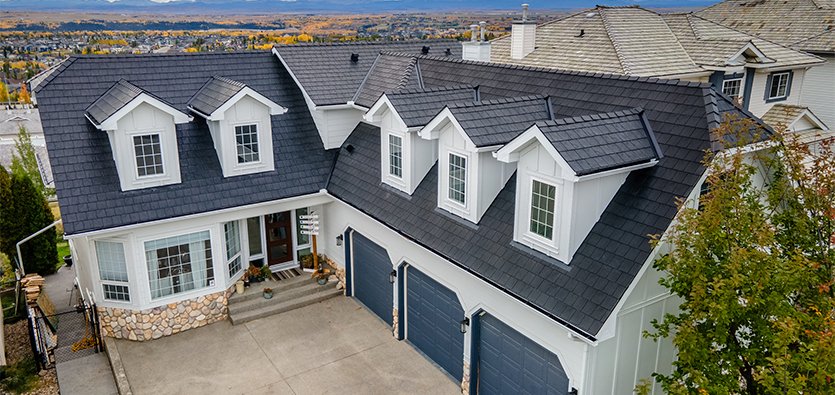
Eco roofing is energy-smart, low-waste roofing built for Calgary’s cold winters, hail, and summer heat. It includes cool roofs, rigid metal, recycled rubber shingles, and roof gardens that reduce heat loss and lower your utility bills.
Most systems are Energy Star qualified and can help you take advantage of local rebates. For houses and flat-roofed stores, improved insulation and drainage are essential during Chinook swings.
Superior Roofing directs material selection, installs to code, and backs long-term performance throughout Calgary.
Calgary’s Best Eco Roofing
Calgary’s Zone 7A climate delivers approximately 5,000 heating degree days annually, not to mention hail, chinooks, and significant temperature fluctuations. Calgary’s best eco-roofing systems hold heat in winter and sift snow and hail, all of which pay off quickly here while reducing waste and energy consumption.
Euroshield: recycled rubber built for hail and cold
Euroshield shingles utilize recycled tire rubber and are specifically designed to withstand large hail without cracking. This flexible rubber absorbs impact and remains stable through Calgary’s freeze-thaw cycles.
With its great wind resistance and long service life, it is a natural fit for homeowners concerned about hail claims and noise disturbance. The upfront cost is higher than asphalt, but fewer repairs, robust durability, and recycled content give the long-term value obvious.
Metal, green, and cool roofs: where each shines
A metal roof is the best for snow performance. Smooth panels shed snow, reduce the potential for ice damming, and withstand wind.
It’s lightweight, low maintenance and can last for decades. Green roofs provide insulation in both winter and summer heat, as well as stormwater abatement, requiring delicate plants to withstand cold snaps and intense sunlight.
Cool roof choices, such as asphalt shingles with reflective granules, reduce attic heat in the warmer months and help alleviate AC loads as Calgary’s summers become increasingly hot. All three increase energy efficiency and reduce HVAC needs in our sunny city, which receives over 2,300 hours of sunlight.
Popular sustainable materials and Calgary fit.
- Recycled rubber (Euroshield) offers high hail resistance, has a long life, and diverts tires from landfills.
- Steel or aluminum metal sheds are durable, require low maintenance, are recyclable, and have a strong wind rating.
- Cool asphalt shingles are made with reflective granules that help reduce summer heat. They are familiar with installing and are budget-friendly.
- Green roof systems provide winter insulation and stormwater control. They need professional design and annual checks.
- Cedar from certified sources is a renewable resource that provides natural insulation. It needs care and fire treatment.
Style without trade-offs
Eco roofs can go classic or modern. Metal is available in standing seam, shake, and tile profiles to complement both heritage and modern homes.
Euroshield copies slate or cedar shakes minus the load. Green roofs provide living colour on office and condo rooftops.
Don’t be surprised if eco options cost 25 to 200 percent more up front than plain old asphalt. Schedule inspections every two to three years and annually on greens or solar-integrated systems to maintain performance.
The Financial Case
Eco roofing Calgary is as much a numbers decision as it is a values one. The initial outlay is greater, but the return on investment is extended through reduced energy consumption, lower maintenance costs, an extended lifespan, and enhanced resale value in a marketplace that appreciates sustainability and reliability.
Long-term cost savings and durability
Assuming eco roofs run 25 to 200 percent more than plain asphalt at installation. Metal around the low end has a 25 to 75 percent premium, and solar integration at the high end has a 100 to 200 percent premium before incentives. Over time, cool roofs reduce summer cooling load and stabilize attic temperatures.
In Calgary’s winters, adequate insulation and reflective membranes can help minimize heat loss. Numerous property owners experience approximately 15 percent less winter heating costs after a meticulously crafted eco-renovation. Durable choices, such as Euroshield, which is made of recycled rubber and steel, withstand hail, freeze-thaw cycles, and UV exposure, allowing you to pay less for patching and extend your replacement cycles.
A metal roof costs 50 percent more upfront but lasts three times longer, offering incredible value even before considering the energy and insurance benefits.
Financial comparison of common roofing choices in Calgary
| Material | Upfront Premium vs. Asphalt | Typical Lifespan | Energy Impact | Maintenance |
| Asphalt Shingles | Baseline | 12–20 years | Low | Moderate |
| Cool-Rated Shingles/Membranes | 5–15% | 15–25 years | Lower cooling costs | Low–Moderate |
| Metal Roofing | 25–75% | 40–60 years | Reflective; winter stable | Low |
| Euroshield (Rubber) | 50–100% | 30–50 years | Good insulation | Low |
| Solar Roofing/PV | 100–200% | 25–30 years (PV) | Offsets power bills | Low |
Resale value and buyer demand
Eco roofs indicate low operating expenses and durability in Calgary’s harsh hail and cold conditions. Metal, Euroshield, or solar listings often receive more offers and have a shorter time on market because buyers see energy savings and fewer near-term replacements.
Incentives and how to stack them
The Canada Greener Homes Grant provides up to $5,000 in upgrades that increase thermal efficiency, making it a counterbalance to cool roof, insulation or integrated solutions.
Combine incentives with low-interest financing and utility rebates where possible. Solar systems can last 25 to 30 years with minimal maintenance, so grants just mean a faster payback and a better return on investment.
Navigating Calgary’s Rules
Eco-roofing in Calgary falls under provincial codes, municipal bylaws, and utility standards. Projects must comply with Calgary’s energy, fire, wind, and water regulations for Zone 7A, where we experience approximately 5,000 heating degree days annually.
Codes and performance standards
Calgary uses the Alberta Building Code and the National Energy Code. For low-slope roofs over heated spaces, anticipate high R-values to limit heat loss in Zone 7A. Closed-cell insulation and continuous air and vapour control layers are typically used to achieve these targets.
Fire ratings matter on green and solar-ready roofs, with assemblies generally having to be Class A or better, with non-combustible cover boards and tested membranes. Drainage layers on vegetated roofs must include root barriers, filter fabric, and overflow scuppers sized to accommodate local storms, as well as guards at drains to prevent media loss.
Armed with hail and Chinook winds, choose membranes with certified impact and uplift ratings.
Permits and approvals
Green roofs and solar frequently require a building permit, and letters from structural engineering are commonplace to verify live load, saturated media load, snow drift, and wind uplift. Electrical permits are applied to PV. Certain advanced membranes or recycled systems might need CCMC or listed approvals.
Submittals typically consist of roof plans, assembly details, maintenance plans, and wind and water management. The City of Calgary’s Green Homes Program can expedite the review process and potentially lower permit fees when sustainability requirements are met.
Stormwater compliance
Calgary considers green roofs as onsite stormwater management tools. Comprehensive systems must demonstrate retention and controlled release, with specific details for drains, weirs, and overflow.
Maintenance plans must maintain media depth, vegetation health, and ensure proper drainage flow. Check after the spring melt for winter damage and ensure that all drainage systems operate properly before winter.
Practical compliance tips
- Structural: Verify loads and obtain stamped calculations for the saturated green roof weight.
- Thermal: target high R; seal air leaks in parapets/curbs.
- Fire: Use non-combustible cover boards and Class A assemblies.
- Water: size scuppers, add secondary overflows, test drains.
- Operations: Schedule professional inspections every 2 to 3 years, or annually for green roofs or solar systems.
- Incentives: stack Canada Greener Homes Grant (up to $5,000) with City resources.
- Contractor: Hire teams with 3 to 5 years or more experience on the specific system.
Beyond the Roof Itself
Eco-roofing in Calgary extends beyond the membrane and shingles. It influences a building’s energy performance, how occupants experience the interior space, and how the city processes heat and precipitation.
Environmental performance that helps the whole city
Green roofs reduce the urban heat island effect by shading surfaces and cooling through evapotranspiration, which is particularly significant in downtown and industrial areas with vast flat roofs. They hold back rain, reducing strain on Calgary’s stormwater system during cloudbursts.
In Zone 7A, with approximately 5,000 heating degree days, high-R roof assemblies and reflective membranes help reduce heat loss in winter and heat gain in summer. Boasting approximately 2,300 hours of sun annually, cool roofs reflect unwanted heat on scorchers, while solar-ready or solar-integrated roofs capture power on clear winter afternoons.
Here in our dry air, even dust and pollen can reduce the reflectivity of mirrors and solar panels by 5 to 10 percent when not cleaned on a regular schedule.
Social and wellness gains of living roofs
Living roofs provide small habitats for bees and butterflies when seeded with hardy native sedum and grasses. They provide tenants with their own little quiet garden nook to unwind or grow herbs.
On multi-family or commercial assets, these rooftops can become shared green spaces that cut glare, soften noise from Deerfoot or Crowchild traffic, and add a calm buffer above the street.
Energy efficiency as a whole‑building plan
Sustainable roofing rocks as a system. Combine a durable, well-sealed membrane with continuous insulation, tight air and vapour control, and well-detailed parapets to reduce thermal bridging.
Pair your roof with attic or top-floor insulation levels, air sealing around hatches, and high-performance cladding and windows. Verify that drains and scuppers run clear before winter.
Schedule professional inspections every 2 to 3 years for the majority of systems and annually for green roofs or solar arrays. For green roofs, spring is the ideal time to remove dead growth, fertilize plants, and test drainage after dormancy.
Consider applying for local grants to help offset upfront costs.
- Solar PV or solar shingles
- Cool roof coatings with high SRI
- Smart ventilation and ERVs
- Rainwater capture and cisterns
- High‑R rigid insulation upgrades
- Real‑time roof monitoring sensors
Year-Round Performance
Eco roofing in Calgary has to deal with hail, deep cold, chinook swings and massive winds. Smart decisions that score well here save energy, withstand impact and minimize maintenance.
Durable in hail, snow, and swings
Like Euroshield rubber roofing, made from recycled tires, it absorbs bouncebacks that would bruise or crack other roofs. It maintains shape in freeze-thaw cycles, which are important with rapid Chinook warm-ups. High-gauge metal roofing resists denting and sheds snow clean, reducing ice loads and drift hazard along eaves.
Combined with fasteners and underlayment, metal creates a snug, energy-smart envelope that delivers as temperatures soar above and fall below 0°C in the same day.
Thermal control that fits Calgary
Calgary experiences roughly 5,000 heating degree days annually, so a roof’s thermal efficiency counts. Green roofs provide consistent winter insulation and summer heat buffering and depend on sturdy, drought- and frost-resistant plantings for success.
Cool roof coatings and reflective single-ply or modified bitumen systems bounce away summer sun, reducing cooling demand. In winter, combine reflectance with thick attic insulation to dodge heat loss surcharges.
With appropriate attic insulation and properly balanced ventilation, attic systems reduce heat loss during winters and heat gain during summers while limiting ice dams and attic moisture.
Lower upkeep and strong wind hold
Elite-things reduce sprucing. Euroshield and metal require less storm repair because they resist cracking and blow-off. Most metal systems are rated for the high winds typical of exposed Calgary locations.
Green and solar setups perform well, but require more attention due to the additional layers and hardware.
Seasonal maintenance tips
- Spring: Inspect flashings, seams, and fasteners for proper installation. Clear drains. Check the attic for damp spots after the melt.
- Summer: Wash debris and recoat reflective surfaces if they are dull. Verify plant irrigation on green roofs.
- Fall: Clean gutters before freeze. Check snow guards on metallurgy. Trim branches.
- Winter: Monitor snow load and drifting, securely shed surplus snow from low-slope rooftops, and watch for ice dams.
- Schedule: Inspect every 2 to 3 years for most roofs. Inspect annually for green roofs or solar arrays.
Finding Your Installer
Calgary’s eco-roofing requires a contractor who understands our freeze-thaw cycles, chinooks, and snowfall loads in Climate Zone 7A, and who can tailor materials to your roof’s shape, pitch, and usage.
Seek proven local eco expertise.
Narrow down Calgary contractors with 3 to 5 or more years of experience installing the system you want, which includes Euroshield rubber, metal with high recycled content, cool roof coatings, vegetative or green roofs, or high R-insulated flat roof assemblies.
Obtain a minimum of three local references, including their addresses that you can verify by driving by. For vegetative roofs, verify experience with drainage layers, root barriers, and engineered growing media appropriate for our dry springs and cold snaps.
For Euroshield, inquire about cold-weather seam work and eaves detailing.
Check reviews, credentials, and local outcomes to ensure the best possible care.
Check out their Google ratings, BBB accreditation and complaint history. Request to review documented Calgary projects, including before-and-after photos, snow-load detailing, curb and parapet flashing, and winter installation procedures.
Check up on COR safety and liability and WCB coverage. Solid portfolios will demonstrate long-run thermal and leak performance through a minimum of two winters.
Get detailed quotes and specs.
Ask the installer to provide a line-item quote in CAD that breaks out labour, materials, disposal, insulation (R-value), vapour control, and ventilation.
Eco systems can cost 25 to 200 percent more than asphalt. A transparent cost breakdown assists in balancing payback and longevity.
Request data sheets and installation manuals for membranes, Euroshield SKUs, fasteners, and adhesives rated for installations at -30 °C. You need thermal modelling or an R-value goal for flat roofs, as well as drain design and overflow sizing.
Prioritize warranties, communication, and maintenance.
Select installers that provide workmanship and manufacturer warranties in writing, along with transfer conditions. Confirm a communication plan, including a single point of contact, weekly updates, and photo logs.
Ensure they include a maintenance program: spring and fall tune-ups to clear debris, check seals and terminations, and document wear. Schedule inspections every two to three years for the majority of systems, and annually for green roofs and more complex assemblies.
Post-installation care should include snow maintenance, leak detection, and minor repairs at a flat fee.
Conclusion
Eco roofing – Calgary pays. Reduced heat loss in winter. Cool attics in July. Fewer ice dams in chinooks. Rooftop longevity, minimized waste. Maybe metal with high solar reflectivity, SBS with a cool top coat, or a vegetated slice of a flat roof in the Beltline. We design for local code and real weather, not wish lists.