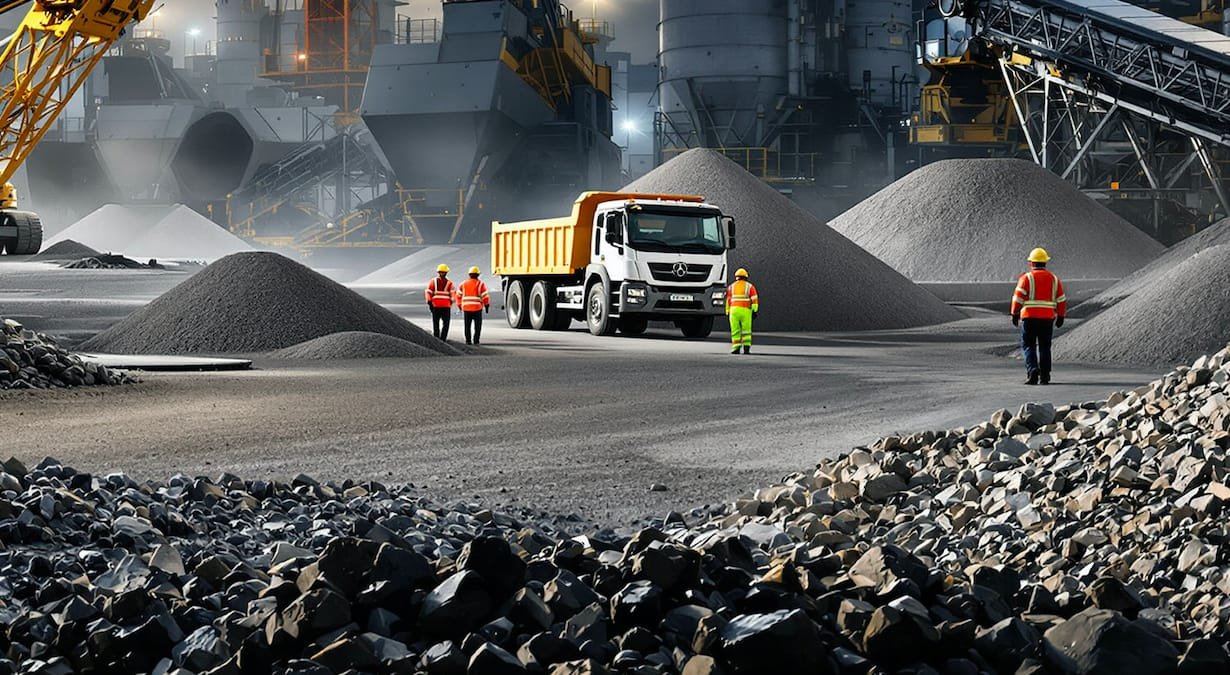
On modern construction and recycling sites, choosing the right crushing equipment can make the difference between a profitable job and a logistical headache. While jaw and cone crushers have their place, there are specific applications where an impact crushing machine clearly delivers better results. Thanks to its ability to handle softer materials, mixed debris, and recycling-focused workloads, an impact crusher often becomes the most versatile and cost-effective solution on site.
Below are five real-world jobs where impact crushing machines consistently outperform every other crusher type, based on productivity, material quality, and overall operating efficiency.
1. Concrete Recycling From Demolition Sites
Concrete recycling is one of the most common impact crushing machine applications, and for good reason. Demolition waste is rarely clean or uniform. It often contains rebar, wire mesh, asphalt residue, and other contaminants that can slow down or damage traditional crushers.
Impact crushers excel in this environment because they:
- Break concrete along natural fracture lines
- Separate embedded steel more efficiently
- Produce a highly cubic end product suitable for reuse
For contractors asking for the best crusher for concrete recycling, impact crushers usually win due to their ability to process reinforced concrete without excessive pre-sorting. The resulting aggregate can be reused for road base, backfill, or new concrete mixes, reducing material hauling and disposal costs.
Compared to jaw crushers, impact machines generate fewer elongated particles and more consistent sizing, which translates directly into better compaction and project quality.
2. Asphalt Crushing and Road Rehabilitation Projects
When it comes to asphalt milling and road reconstruction, an impact crushing machine offers unmatched flexibility. Asphalt is softer than virgin stone but abrasive enough to challenge less adaptable equipment.
A crusher for asphalt and concrete must be capable of:
- Maintaining consistent output gradation
- Handling variable feed sizes
- Minimizing fines while preserving asphalt binder
Impact crushers achieve this by using high-speed rotors that fracture material without excessive grinding. This process preserves aggregate structure and binder quality, which is critical when producing recycled asphalt pavement for reuse.
Mobile road crews often prefer impact crushers because they can be deployed directly on site, reducing the need to transport milled asphalt to centralized recycling facilities.
3. Urban Demolition and Confined Job Sites
Urban demolition presents unique challenges: limited space, strict noise regulations, and tight project timelines. In these environments, a mobile impact crushing machine frequently outperforms bulkier and more rigid crusher types.
Key advantages include:
- Compact footprint for confined sites
- Faster setup and relocation
- Reduced reliance on additional screening equipment
Unlike jaw crushers that require secondary processing to refine material shape, impact crushers often deliver finished product in a single pass. This simplifies site logistics and reduces the number of machines required on location.
For contractors working in city centers or residential zones, impact crushers provide a balance of productivity and operational control that is hard to match.
4. Mixed Construction and Demolition Waste Processing
Mixed C and D waste is unpredictable by nature. It can include concrete, brick, asphalt, stone, and even softer materials like drywall or wood. This is where the debate of impact crusher vs jaw crusher becomes especially relevant.
Jaw crushers are designed primarily for hard, uniform materials. When faced with mixed debris, they often require extensive sorting and can suffer from blockages or inefficient throughput.
Impact crushers, by contrast:
- Handle heterogeneous feed material more effectively
- Reduce clogging caused by irregular shapes
- Allow for adjustable output size on the fly
For companies involved in construction waste recycling equipment, impact crushers offer the adaptability needed to process diverse material streams without constant reconfiguration.
5. Small to Mid-Sized Contractors Competing With Recycling Yards
Historically, only large recycling facilities could afford to process construction waste efficiently. Today, compact and mobile impact crushers have leveled the playing field.
For smaller contractors, owning a mobile impact crushing machine means:
- Eliminating tipping fees
- Reducing hauling costs
- Creating reusable material on demand
Instead of paying to dispose of waste and purchasing new aggregate, contractors can recycle material directly on site. Over time, this transforms crushing equipment from a cost center into a revenue-generating asset.
This is especially valuable for contractors handling repetitive jobs like residential developments, utility trenching, or small commercial demolitions.
Why Impact Crushers Deliver Superior Material Quality
Beyond specific job types, impact crushers consistently produce higher-quality aggregate. The crushing action creates more angular, cubic particles, which improves:
- Compaction
- Load-bearing capacity
- Final surface finish
These characteristics are critical for base layers, road substructures, and concrete applications. This is why impact crushers are increasingly selected for premium recycling applications where material quality directly affects project performance.
When evaluating impact crusher vs jaw crusher, material shape and end-use quality often tip the scale in favor of impact machines.
Cost Efficiency and Operational Flexibility
From a financial perspective, impact crushing machines often offer faster return on investment in recycling-heavy operations. Their versatility allows them to replace multiple pieces of equipment, reducing capital expenditure and maintenance complexity.
Additional benefits include:
- Lower fuel consumption per ton in recycling applications
- Faster material throughput
- Reduced need for secondary crushing stages
For companies focused on sustainability and efficiency, investing in the best crusher for concrete recycling is not just an environmental decision but a strategic business move.
Final Thoughts
Not every project requires an impact crusher, but for the five jobs outlined above, it is often the most practical and profitable choice. Whether processing demolition concrete, recycling asphalt, handling mixed waste, or operating in urban environments, impact crushing machines deliver unmatched adaptability and material quality.
As construction and recycling regulations continue to evolve, demand for flexible construction waste recycling equipment will only grow. Contractors who understand where and how impact crushers outperform other crusher types position themselves ahead of the curve, both operationally and financially.
Choosing the right crusher is not about brand loyalty or tradition. It is about matching the machine to the job. And in these five applications, impact crushing machines clearly lead the field.