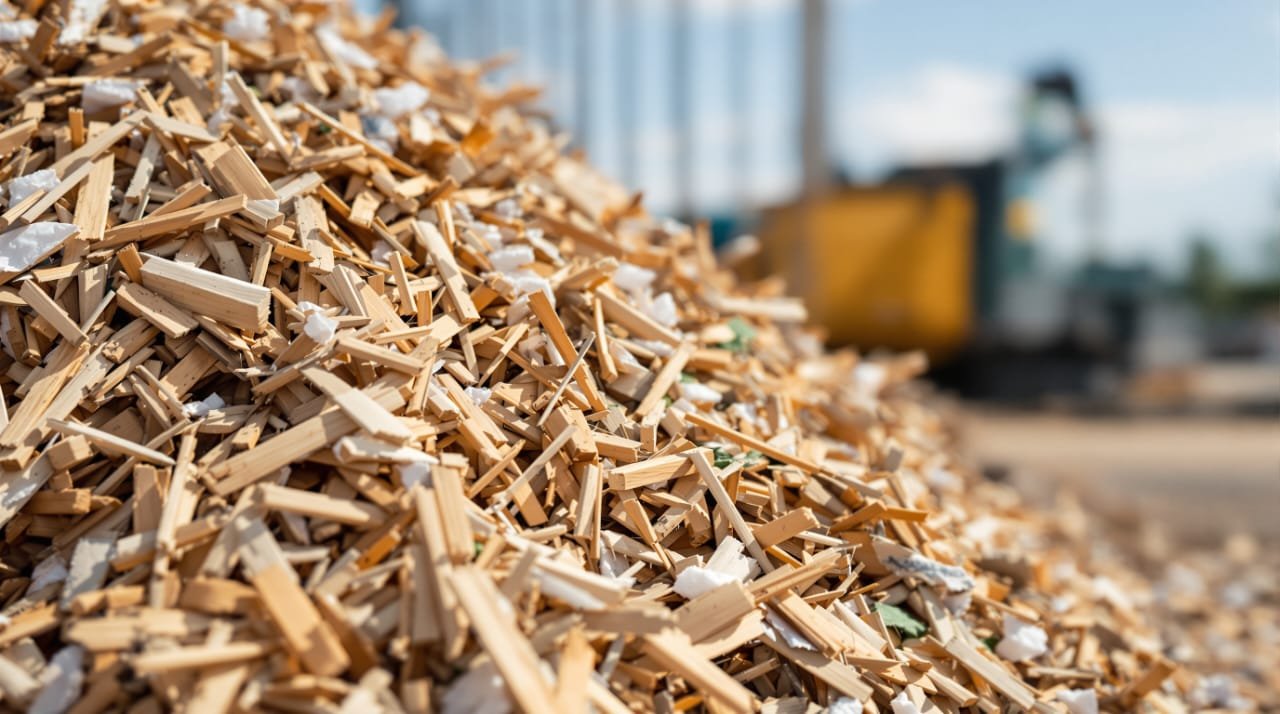
For years, large recycling firms have dominated waste processing by leveraging scale, permanent facilities, and high-capacity equipment. Small and mid-sized contractors often felt locked out of this space, forced to rely on third parties for waste handling and recycling. Today, that dynamic is changing. With mobile solutions like the Komplet Krokodile Mobile Slow-Speed Shredder from Komplet, smaller contractors can build flexible, cost-effective recycling workflows that allow them to compete directly with much larger players.
This shift is not about matching size. It is about using smarter, more adaptable tools that fit modern construction and recycling realities.
The traditional disadvantage of smaller contractors
Large recycling firms benefit from centralized infrastructure. Permanent shredding plants, fixed sorting lines, and long-term contracts allow them to process huge volumes at low per-unit costs. Small contractor operations, by contrast, typically face:
- High hauling fees to off-site recyclers
- Limited control over processing schedules
- Long turnaround times for waste handling
- Reduced profit margins on recycling-heavy projects
These limitations often push smaller companies into a purely disposal-focused model, even when recycling would be more profitable or sustainable.
However, the rise of mobile recycling equipment for contractors has fundamentally changed what is possible at a smaller scale.
Why mobility changes the competitive landscape
Mobility is the key advantage smaller contractors can exploit. Unlike large firms tied to fixed facilities, small and mid-sized operators can bring processing equipment directly to the job site.
Mobile shredding equipment allows contractors to:
- Process waste on-site instead of transporting it
- Adapt quickly to different job locations
- Scale operations up or down based on project size
- Avoid long-term infrastructure investments
This flexibility makes it possible to compete with large recycling firms not by volume, but by efficiency, responsiveness, and cost control.
Turning waste processing into a competitive advantage
Waste is often treated as a necessary cost. For contractors willing to rethink their approach, it can become a strategic advantage.
By using cost-effective recycling solutions for contractors, companies can reduce disposal expenses while increasing control over material flows. Shredding materials on-site reduces volume, improves handling, and prepares waste for reuse or resale.
Instead of paying to remove bulky debris, contractors can:
- Lower transportation costs through volume reduction
- Improve material separation
- Reuse processed material where permitted
- Offer waste management as part of a bundled service
This added value can be a decisive factor when bidding against larger competitors.
Competing without permanent facilities
One of the biggest misconceptions is that effective recycling requires permanent plants. In reality, many projects do not generate consistent waste volumes over long periods. Building or relying on fixed infrastructure creates inefficiencies for smaller operators.
Mobile shredding equipment advantage lies in its ability to function as a temporary, project-based solution. Contractors can deploy it only when needed and move it between sites as projects change.
This approach allows waste processing for small construction companies to align with real project timelines rather than forcing projects to adapt to external facilities.
Handling mixed and unpredictable waste streams
Construction waste is rarely uniform. Wood, plastic, insulation, packaging, and light demolition debris often arrive mixed together. Large recycling firms rely on complex sorting lines to handle this.
Slow-speed shredders are well suited for these mixed streams. Their high-torque, low-speed operation reduces the risk of damage when contaminants like metal are present.
For smaller contractors, this means fewer breakdowns, lower maintenance costs, and greater reliability when processing real-world waste. The ability to handle mixed materials on-site reduces dependence on specialized external recyclers.
Lowering barriers to entry in recycling services
Large firms benefit from scale, but they also carry high fixed costs. Smaller contractors can exploit this by keeping overhead low.
Cost-effective recycling solutions for contractors focus on:
- Lower capital investment than permanent plants
- Reduced staffing requirements
- Minimal site preparation
- Faster setup and relocation
This lower barrier to entry allows small and mid-sized companies to offer recycling services without the financial risk associated with large-scale infrastructure.
Over time, this capability can open new revenue streams, including subcontracted waste processing or localized recycling services.
Winning bids through flexibility and speed
In competitive markets, speed matters. Large recycling firms often operate on rigid schedules. Smaller contractors equipped with mobile recycling equipment for contractors can respond faster.
Being able to process waste immediately on-site means:
- No waiting for pickup slots
- Fewer project delays
- Cleaner and safer job sites
- Better coordination with other trades
This operational agility is highly attractive to developers and project managers who value predictability and reduced downtime.
Strengthening sustainability credentials
Sustainability has become a decisive factor in many construction bids. Clients increasingly demand proof of waste reduction and recycling strategies.
Small contractor recycling solutions based on mobile shredding allow companies to demonstrate:
- Reduced landfill dependency
- Lower transportation emissions
- Active material recovery on-site
- Compliance with local waste regulations
These benefits are no longer exclusive to large firms. With the right equipment, smaller contractors can meet or exceed sustainability expectations while maintaining profitability.
Expanding into new markets and project types
Once a contractor gains control over waste processing, new opportunities emerge. Projects that were previously unprofitable due to high disposal costs become viable.
Mobile shredding supports expansion into:
- Urban renovation projects with limited space
- Remote sites without nearby recycling facilities
- Short-term demolition and infrastructure work
- Municipal or public-sector contracts with recycling requirements
By controlling waste processing internally, small and mid-sized contractors reduce reliance on external partners and increase operational independence.
Competing smarter, not bigger
Competing with large recycling firms does not require matching their scale. It requires a different approach built on flexibility, efficiency, and smart investment.
Mobile shredding equipment advantage lies in its ability to align waste processing with the realities of modern construction. For small and mid-sized contractors, this means:
- Lower costs
- Greater control
- Faster response times
- Stronger sustainability positioning
As recycling expectations continue to rise across the construction industry, contractors who adopt mobile, adaptable solutions will not only compete with large firms but, in many cases, outperform them where it matters most.